Bottle labeling machines are automated or semi-automated systems designed to apply labels to bottles in a consistent and efficient manner. These machines are commonly used in packaging lines across industries such as beverages, pharmaceuticals, cosmetics, chemicals, and food production. Their main function is to place labels accurately on containers so that important information—such as product identity, ingredients, and safety details—can be clearly communicated.
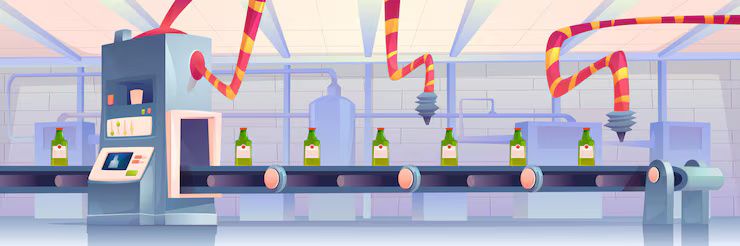
Modern labeling machines use sensors, conveyors, and digital controls to ensure each bottle receives the correct label at the right position. Earlier labeling methods relied heavily on manual application, which often resulted in inconsistent placement and slower production speeds. As manufacturing operations expanded and product variety increased, automated labeling technology became essential.
There are several common types of bottle labeling machines used in packaging automation:
-
Automatic labeling machines integrated into high-speed production lines
-
Semi-automatic labeling machines used for smaller manufacturing setups
-
Wrap-around labeling machines for cylindrical bottles
-
Front and back labeling machines for containers requiring multiple labels
-
Pressure-sensitive labeling machines that use adhesive labels applied through rollers
The basic workflow involves bottles moving along a conveyor, sensors detecting their position, and labeling heads applying the label while maintaining precise alignment. Control panels and software systems help operators adjust settings such as label position, bottle spacing, and labeling speed.
These machines are part of the broader packaging automation ecosystem, which includes filling machines, capping machines, inspection systems, and coding equipment.
Why Bottle Labeling Machines Matter in Modern Manufacturing
Labeling plays an important role in product packaging because it communicates key information to consumers, distributors, and regulatory authorities. As production volumes increase and supply chains become more complex, automated labeling machines help ensure accuracy, efficiency, and compliance.
Several industries depend on reliable labeling systems to maintain consistent packaging standards:
-
Food and beverage manufacturing
-
Pharmaceutical production
-
Cosmetic and personal care packaging
-
Chemical and industrial products
These sectors often require labels that include product identification, batch numbers, expiration dates, ingredient lists, and safety warnings. Automated labeling machines help ensure that this information appears clearly and consistently on every bottle.
The technology also helps address operational challenges in manufacturing environments.
Key problems solved by labeling automation include:
-
Reducing manual labeling errors
-
Increasing packaging line efficiency
-
Supporting high-volume production
-
Ensuring consistent brand presentation
-
Maintaining regulatory labeling requirements
The impact is particularly noticeable in high-speed production environments where thousands of bottles move through packaging lines every hour.
Below is a simplified comparison of manual and automated labeling systems.
| Feature | Manual Labeling | Automated Labeling Machines |
|---|---|---|
| Label placement accuracy | Moderate | High |
| Production speed | Low | High |
| Human involvement | High | Low |
| Consistency | Variable | Consistent |
| Integration with production line | Limited | Strong |
Another advantage is integration with digital printing and barcode systems. Labeling machines can work alongside printers that add variable data, such as batch codes or QR codes, which support product traceability and inventory tracking.
Recent Updates and Technology Trends in Labeling Equipment
Over the past year, packaging technology has continued to evolve as manufacturers adopt digital tools and automation. Several trends have influenced bottle labeling machine development in 2024 and early 2025.
One major trend is the increased use of smart sensors and machine vision systems. These technologies allow labeling machines to detect bottle position and orientation more accurately, reducing misalignment and labeling errors.
Another important development involves Industry 4.0 integration. Modern packaging equipment can now connect with factory monitoring systems that track production metrics such as machine speed, downtime, and labeling accuracy.
Recent technology trends include:
-
Integration with Industrial Internet of Things (IIoT) platforms
-
AI-assisted inspection for label quality control
-
Digital printing systems for variable data labeling
-
Energy-efficient motors and drives
-
Compact modular labeling equipment for flexible packaging lines
In 2024, several packaging equipment manufacturers introduced labeling machines designed for sustainable packaging materials, including recyclable and biodegradable labels. These systems adapt to different adhesive properties and surface textures.
Another development has been the increased adoption of QR code labeling. Many companies now include QR codes on packaging to provide consumers with product information, traceability data, or digital product documentation.
The chart below illustrates common automation levels used in labeling equipment.
| Automation Level | Typical Use Case |
|---|---|
| Manual | Small production environments |
| Semi-automatic | Medium-scale packaging operations |
| Fully automatic | High-volume manufacturing lines |
| Smart automated systems | Connected Industry 4.0 facilities |
The shift toward connected equipment allows production managers to monitor packaging performance in real time, improving operational visibility across manufacturing plants.
Regulations and Labeling Compliance in Packaging Industries
Bottle labeling is closely linked to regulatory requirements in many countries. Governments and regulatory agencies establish rules that define what information must appear on product labels, especially in sectors such as food, pharmaceuticals, and chemicals.
In India, labeling regulations are influenced by several regulatory authorities.
One key authority is the Food Safety and Standards Authority of India, which oversees food labeling standards. Food packaging must include details such as ingredient lists, nutritional information, manufacturing date, and expiration date.
Pharmaceutical products are regulated by the Central Drugs Standard Control Organization, which requires clear labeling of medicine names, dosage instructions, and safety warnings.
Other regulatory frameworks affecting labeling include:
-
Legal Metrology packaging rules for packaged goods
-
Hazard labeling requirements for chemicals
-
Environmental guidelines related to packaging materials
International companies exporting products must also comply with global labeling regulations such as:
-
European Union packaging directives
-
U.S. food and drug labeling standards
-
International barcode standards used in supply chains
Labeling machines play a key role in ensuring that required information is placed accurately and consistently on every bottle. Automated systems reduce the risk of missing or misaligned labels that could cause regulatory compliance issues.
Tools and Digital Resources for Labeling and Packaging Operations
Manufacturers and packaging professionals often use specialized tools and software to manage labeling workflows and production efficiency. These resources help design labels, track production data, and verify labeling accuracy.
Common tools used in labeling environments include:
Label design software
-
BarTender Label Design Software
-
NiceLabel
These platforms allow users to create barcode labels, product labels, and variable data labels that can be printed during packaging operations.
Barcode and QR code generation tools
-
Barcode generators integrated into label design platforms
-
QR code creation tools used for digital product information
Production monitoring software
-
Packaging line monitoring dashboards
-
Machine performance tracking systems
Industrial hardware commonly used with labeling machines
-
Barcode scanners
-
Conveyor control systems
-
Industrial printers for variable data labeling
The following table highlights common digital tools used in labeling environments.
| Tool Category | Purpose |
|---|---|
| Label design software | Create product and barcode labels |
| Barcode generators | Produce machine-readable codes |
| Machine monitoring software | Track production efficiency |
| Inspection systems | Verify label placement accuracy |
| ERP integration tools | Connect packaging data to inventory systems |
These resources support efficient packaging operations and help maintain labeling consistency across production lines.
Frequently Asked Questions About Bottle Labeling Machines
What is a bottle labeling machine used for?
A bottle labeling machine applies labels to containers automatically or semi-automatically. It is commonly used in manufacturing industries such as beverages, pharmaceuticals, cosmetics, and chemicals to ensure consistent label placement.
What types of bottles can labeling machines handle?
Labeling machines can handle a wide variety of container shapes, including cylindrical bottles, square containers, flat bottles, and oval containers. Different labeling mechanisms are designed to accommodate different shapes and materials.
How accurate are automated labeling machines?
Modern labeling machines use sensors, motors, and control systems to achieve high accuracy. In automated packaging lines, label placement errors are significantly reduced compared with manual methods.
Can labeling machines integrate with other packaging equipment?
Yes. Labeling machines are often integrated with filling machines, capping machines, inspection systems, and barcode printers as part of a complete packaging line.
What information typically appears on bottle labels?
Bottle labels commonly include product names, ingredients, batch numbers, expiration dates, barcodes, QR codes, and safety information depending on industry regulations.
Conclusion
Bottle labeling machines are an important part of modern packaging operations. They help manufacturers apply labels accurately, maintain product information standards, and improve the efficiency of production lines. As industries continue to adopt automation and digital technologies, labeling equipment has evolved to include smart sensors, machine vision systems, and connected monitoring tools.
Recent developments in packaging automation show a growing emphasis on data integration, sustainability, and regulatory compliance. Labeling machines now work alongside digital printing systems, barcode technologies, and production monitoring platforms to support complex manufacturing environments.
Regulatory frameworks governing food, pharmaceuticals, and chemical products also highlight the importance of accurate labeling. Automated labeling systems help manufacturers meet these requirements while maintaining consistent product presentation.
As packaging technology continues to advance, bottle labeling machines will remain a key component of efficient and compliant manufacturing operations across many industries.