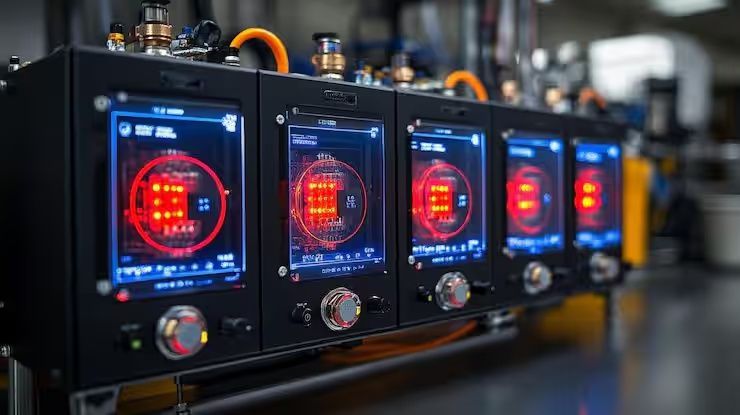
Industrial sensors are devices designed to detect, measure, and report physical or chemical conditions within industrial environments. These conditions may include temperature, pressure, proximity, motion, vibration, flow, light, or chemical composition. The primary purpose of industrial sensors is to convert real-world conditions into data that machines, systems, or operators can understand and use.
Industries rely on sensors to observe processes that cannot be monitored manually at all times. In factories, sensors track machine health, production speed, and environmental safety. In energy facilities, they measure pressure, heat, and flow to maintain stable operations. In logistics and infrastructure, sensors help monitor movement, weight, and structural conditions.
Over time, industrial sensors have evolved from simple mechanical switches to advanced electronic and digital systems. Modern sensors often integrate with automated control systems, industrial networks, and data platforms. This evolution supports consistent monitoring, repeatable processes, and data-driven decision-making across many sectors.
Importance: Why Industrial Sensors Matter Today
Industrial sensors play a central role in modern industrial systems. Their importance has grown as industries become more automated, interconnected, and data-focused.
Key reasons industrial sensors matter today include:
-
Supporting automation by providing real-time input to machines and control systems
-
Improving operational reliability by detecting abnormal conditions early
-
Enhancing workplace safety through continuous monitoring of hazardous variables
-
Enabling data collection for analysis, optimization, and long-term planning
Industrial sensors affect a wide range of stakeholders:
-
Manufacturing operators who rely on accurate measurements
-
Engineers and technicians responsible for system performance
-
Facility managers overseeing efficiency and compliance
-
Policymakers and regulators monitoring industrial safety and emissions
By detecting changes in conditions quickly, sensors help reduce downtime, limit material waste, and improve consistency. In sectors such as manufacturing, energy, chemicals, food processing, and transportation, sensors help solve problems related to quality control, safety monitoring, and process stability.
Recent Updates: Trends and Developments from the Past Year
In the past year, industrial sensor technology has continued to advance in several notable ways.
One major trend during 2025 has been the wider adoption of smart sensors with built-in processing capabilities. These sensors can perform basic analysis at the device level, reducing the amount of raw data sent to central systems. This approach supports faster response times and more efficient data handling.
Another development has been the increased use of wireless industrial sensors. Improvements in industrial wireless protocols have made sensor networks more reliable in environments with interference, vibration, and extreme temperatures. During 2024–2025, several industries expanded wireless monitoring for hard-to-reach or mobile equipment.
Cybersecurity has also gained attention. As sensors become more connected, manufacturers and regulators have emphasized secure communication standards and device authentication. In late 2024, industry guidance documents highlighted best practices for protecting sensor data within industrial networks.
Sustainability-related monitoring has expanded as well. Sensors that track energy usage, emissions, and resource consumption are increasingly integrated into industrial reporting systems, reflecting broader environmental and efficiency goals.
Laws and Policies: Regulatory and Standards Landscape
Industrial sensors are influenced by technical standards and regulatory frameworks rather than direct consumer laws. These rules help ensure accuracy, reliability, and safety across industries.
International standards bodies play a key role. Organizations such as International Organization for Standardization and International Electrotechnical Commission publish standards that define testing methods, performance requirements, and safety guidelines for sensors and related equipment.
In India, industrial sensor usage is indirectly shaped by national policies on manufacturing, workplace safety, and environmental monitoring. Programs under the Ministry of Heavy Industries and related regulatory agencies encourage modernization, automation, and quality compliance in industrial facilities.
Environmental and safety regulations also influence sensor deployment. Monitoring requirements for emissions, pressure systems, and hazardous environments often rely on certified sensors that meet defined accuracy and durability standards. Compliance with these rules helps ensure consistent reporting and risk management.
Tools and Resources: Learning and Practical References
A wide range of tools and resources support understanding and application of industrial sensors. These resources are commonly used for education, system design, and performance evaluation.
Helpful resources include:
-
Technical documentation from standards organizations outlining sensor classifications and testing methods
-
Industrial automation software platforms that visualize sensor data through dashboards and trend charts
-
Simulation tools used in engineering education to model sensor behavior under different conditions
-
Online knowledge libraries and digital handbooks focused on instrumentation and measurement principles
-
Open technical forums and research publications discussing sensor technologies and case studies
Below is an example table summarizing common industrial sensor types and their typical applications:
| Sensor Type | Measured Variable | Typical Applications |
|---|---|---|
| Temperature Sensor | Heat and cold levels | Process control, safety systems |
| Pressure Sensor | Gas or liquid force | Hydraulic systems, pipelines |
| Proximity Sensor | Object presence | Automation, counting systems |
| Flow Sensor | Liquid or gas flow | Energy, chemical processing |
| Vibration Sensor | Mechanical movement | Equipment condition monitoring |
These tools and references help learners and professionals build foundational knowledge and stay informed about current practices.
Frequently Asked Questions About Industrial Sensors
What is the difference between industrial sensors and consumer sensors?
Industrial sensors are designed for harsh environments, continuous operation, and high reliability. Consumer sensors are typically built for lighter use and controlled conditions.
How are industrial sensors calibrated?
Calibration involves comparing sensor readings with known reference values. This process helps maintain accuracy and is often performed according to established standards.
Can industrial sensors work in extreme environments?
Many industrial sensors are engineered to function under high temperatures, pressure, vibration, or corrosive conditions, depending on their design and materials.
Why is data accuracy important in industrial sensing?
Accurate data supports safe operations, consistent product quality, and informed decision-making. Inaccurate readings can lead to inefficiencies or safety risks.
How do sensors communicate with control systems?
Sensors may use wired or wireless communication protocols to transmit signals to controllers, monitoring systems, or data platforms.
Conclusion: The Role of Industrial Sensors in Modern Industry
Industrial sensors form the foundation of monitoring and measurement across modern industrial systems. By translating physical conditions into usable data, they enable automation, safety oversight, and process understanding. Recent advances in smart sensing, connectivity, and security continue to expand their capabilities and applications.
As industries evolve toward more data-driven and interconnected operations, the role of industrial sensors remains central. A clear understanding of sensor fundamentals, standards, and resources helps learners and professionals navigate this essential field with confidence and clarity.