Construction machinery refers to heavy-duty equipment used to carry out large-scale construction activities such as earthmoving, material handling, lifting, road building, and site preparation. These machines exist to perform tasks that would be difficult, slow, or unsafe if done manually. From early mechanical tools to today’s advanced machines, construction machinery has evolved to meet growing infrastructure demands.
Historically, construction relied heavily on human labor and simple mechanical aids. As cities expanded and infrastructure projects became larger and more complex, machines were developed to increase efficiency and consistency. Modern construction machinery combines mechanical systems, hydraulics, electronics, and digital controls to support precise and repeatable operations.
Construction machinery is commonly used in residential, commercial, industrial, and infrastructure projects. Typical machines include excavators, loaders, bulldozers, cranes, graders, and concrete equipment. Each type is designed for specific functions, helping transform raw land into functional structures and transportation networks.
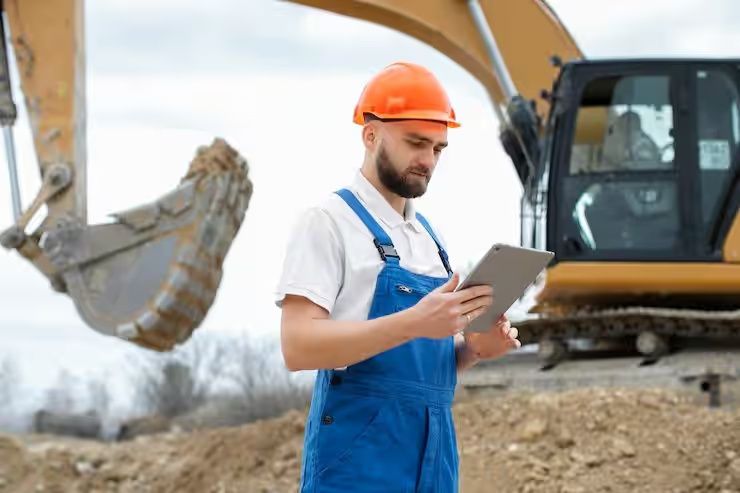
Importance: Why Construction Machinery Matters Today
Construction machinery plays a critical role in modern development. As urbanization increases and infrastructure projects expand, the need for reliable and efficient machinery continues to grow.
Key reasons construction machinery is important include:
-
Supporting large-scale infrastructure such as roads, bridges, and public utilities
-
Improving productivity by completing tasks faster than manual methods
-
Enhancing safety by reducing direct physical strain on workers
-
Enabling precision in grading, lifting, and material placement
Construction machinery affects a wide range of people and sectors. Contractors and engineers depend on it for project execution. Urban planners and governments rely on it to deliver public infrastructure. Communities benefit from improved transportation, housing, and utilities made possible through mechanized construction.
By solving challenges related to time constraints, labor limitations, and project complexity, construction machinery helps maintain consistency and structural reliability across different types of projects.
Recent Updates: Developments and Trends from the Past Year
Over the past year, construction machinery has seen steady technological progress. In 2025, manufacturers continued integrating digital technologies to improve monitoring and control. Machines equipped with sensors and onboard displays now provide real-time information on performance, fuel usage, and operating conditions.
Another notable trend has been the increased focus on automation and operator assistance systems. Semi-automated features, such as grade control and load monitoring, have become more common in earthmoving equipment during 2024–2025. These features help improve accuracy and reduce material rework.
Sustainability has also influenced recent developments. There has been growing attention on reducing emissions and improving energy efficiency in construction machinery. In late 2024, industry reports highlighted a gradual shift toward alternative power systems and improved engine standards.
Connectivity has expanded as well. Machines are increasingly linked to digital platforms that support maintenance planning and usage analysis, helping project teams make informed operational decisions.
Laws and Policies: Regulatory Environment and Standards
Construction machinery is influenced by safety, environmental, and operational regulations. These rules aim to protect workers, ensure public safety, and limit environmental impact.
In India, construction machinery operations are guided by safety regulations under frameworks supported by the Ministry of Labour and Employment. These regulations emphasize safe operation, operator training, and workplace risk management.
Environmental guidelines also affect machinery design and usage. Emission standards for engines are aligned with national environmental policies overseen by bodies such as the Ministry of Environment, Forest and Climate Change. These policies encourage cleaner technologies and responsible equipment operation.
International technical standards published by organizations like the International Organization for Standardization influence testing, safety labeling, and performance benchmarks. Compliance with such standards helps ensure consistency and reliability across projects.
Tools and Resources: Helpful References for Learning and Use
A variety of tools and resources support understanding and effective use of construction machinery. These resources are commonly used by students, engineers, and project planners.
Useful tools and references include:
-
Equipment operation manuals and technical handbooks
-
Digital simulation software for learning machine functions
-
Construction planning templates that outline equipment usage
-
Online knowledge platforms focused on civil engineering and construction methods
-
Safety guideline documents related to heavy machinery operation
The table below provides an overview of common construction machinery and their primary functions:
| Machinery Type | Primary Function | Typical Use Area |
|---|---|---|
| Excavator | Digging and earthmoving | Foundations, trenches |
| Bulldozer | Pushing and leveling soil | Site preparation |
| Crane | Lifting heavy materials | High-rise construction |
| Loader | Material handling | Aggregates, debris |
| Grader | Surface leveling | Road construction |
These tools and references help build foundational knowledge and support safe, informed machinery use.
Frequently Asked Questions About Construction Machinery
What is the main purpose of construction machinery?
Construction machinery is used to perform heavy, repetitive, or precision tasks efficiently, supporting large-scale building and infrastructure projects.
How is construction machinery different from agricultural machinery?
Construction machinery is designed for tasks like lifting, digging, and grading, while agricultural machinery focuses on farming activities such as planting and harvesting.
Why is operator training important for construction machinery?
Proper training helps ensure safe operation, accurate task execution, and reduced risk of accidents or equipment damage.
Can construction machinery be used in urban areas?
Yes, many machines are designed for controlled operation in urban environments, provided safety and noise regulations are followed.
How does technology improve construction machinery performance?
Technology supports better control, monitoring, and efficiency through digital displays, sensors, and data analysis systems.
Conclusion: The Role of Construction Machinery in Development
Construction machinery is a fundamental part of modern building and infrastructure development. By enabling efficient earthmoving, lifting, and material handling, these machines support projects that shape cities and communities. Recent technological updates and regulatory frameworks continue to influence how machinery is designed and used.
Understanding the basics of construction machinery, its functions, and its operating environment helps readers appreciate its importance in everyday infrastructure. As construction needs evolve, machinery remains a key tool in turning plans into durable, functional structures.