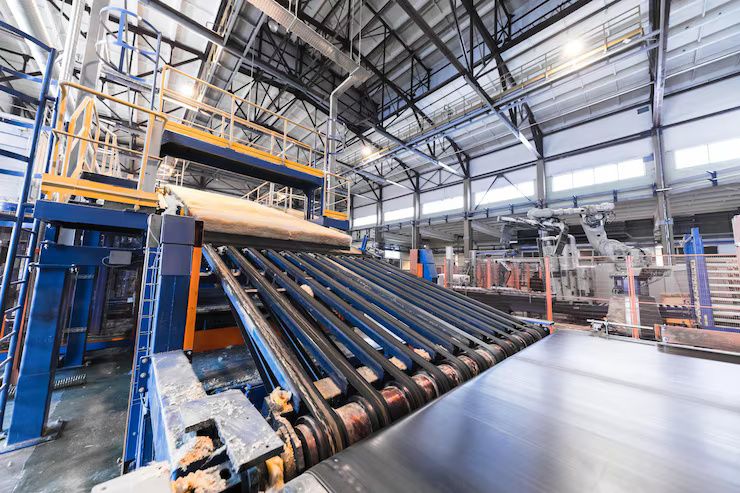
Rubber processing machinery refers to industrial equipment used to transform raw rubber into usable forms for manufacturing finished products. Natural and synthetic rubber begin as materials with limited direct usability. They must be mixed, shaped, heated, and stabilized before they can meet performance requirements for everyday and industrial applications. Rubber processing machinery exists to manage these transformations in a controlled, repeatable way.
Historically, rubber processing started with manual techniques such as hand mixing and simple presses. As rubber use expanded into tires, seals, belts, hoses, footwear, and industrial components, manual methods could no longer meet volume and consistency needs. The development of specialized machinery allowed manufacturers to control temperature, pressure, and composition with greater precision.
Modern rubber processing machinery integrates mechanical motion, thermal control, and automated monitoring. These systems support large-scale production while maintaining material consistency. The machinery does not change the nature of rubber itself; instead, it enables predictable shaping and property development suitable for industrial production.
Importance: Why Rubber Processing Machinery Matters Today
Rubber processing machinery matters today because rubber-based products are deeply embedded in transportation, infrastructure, healthcare, and consumer goods. From vehicle components to industrial seals, the performance of rubber products depends heavily on how the material is processed.
This topic matters because rubber processing machinery:
-
Supports consistent material properties across production batches
-
Enables efficient shaping and forming of rubber compounds
-
Helps maintain quality and dimensional accuracy
-
Allows scalable production for diverse industrial needs
Rubber processing machinery affects manufacturers, engineers, supply chain planners, and quality specialists. Without reliable machinery, rubber products can suffer from defects such as uneven curing, weak bonding, or inconsistent elasticity. These issues can lead to reduced durability or performance limitations.
By addressing challenges related to material handling, heat control, and shaping, rubber processing machinery plays a central role in stable and predictable industrial production.
Recent Updates: Industry and Technology Trends from the Past Year
During 2024 and early 2025, rubber processing technology reflected broader trends in industrial automation and efficiency. In early 2024, there was increased discussion around energy-efficient machinery. Manufacturers highlighted improvements in motor efficiency and thermal insulation to reduce overall energy consumption during mixing and curing stages.
In mid-2024, digital monitoring gained more attention. Processing lines increasingly included sensors to track temperature, pressure, and mixing uniformity in real time. These developments helped improve process transparency and supported data-driven adjustments during production.
By late 2024 and into 2025, sustainability-related considerations became more visible in technical discussions. There was growing interest in optimizing machinery to handle recycled rubber compounds and alternative formulations. This required adjustments in mixing and forming equipment to manage variability in raw materials.
Another notable update involved automation integration. Automated feeding, handling, and transfer systems were more frequently discussed as ways to reduce manual intervention and improve consistency across production cycles.
Laws and Policies: Standards and Regulatory Influence
Rubber processing machinery is influenced by industrial safety standards, environmental regulations, and manufacturing quality frameworks. These rules focus on safe operation, material handling, and responsible industrial practices rather than prescribing specific machine designs.
International standards published by the International Organization for Standardization provide guidance on rubber testing methods, material classification, and quality management systems relevant to rubber manufacturing. These standards help ensure consistency in production and testing across regions.
In India, industrial machinery practices align with frameworks supported by the Bureau of Indian Standards, which addresses machine safety, electrical systems, and workplace conditions. These guidelines influence how rubber processing equipment is designed, installed, and maintained.
Environmental policies related to emissions, waste handling, and workplace exposure also affect rubber processing operations. These regulations encourage controlled processing environments and responsible handling of byproducts generated during rubber manufacturing.
Tools and Resources: Understanding Rubber Processing Systems
A range of technical and educational resources help explain rubber processing machinery and its role in industrial production. These tools focus on learning, planning, and process understanding.
Helpful tools and references include:
-
Rubber compound formulation guides
-
Process flow diagrams for mixing, forming, and curing
-
Material testing references for elasticity and hardness
-
Industrial automation dashboards for process monitoring
-
Engineering handbooks on polymer processing
The table below outlines common rubber processing machines and their primary function:
| Machine Type | Core Function | Typical Application Area |
|---|---|---|
| Two-roll mixing mill | Rubber compound mixing | Material preparation |
| Internal mixer | High-volume controlled mixing | Industrial compound blending |
| Extrusion machine | Continuous shaping | Hoses, profiles, seals |
| Compression molding | Heat and pressure forming | Industrial components |
| Injection molding | Precision shaping | Complex rubber parts |
| Vulcanization press | Rubber curing and stabilization | Final product strength |
These resources help readers understand how different machines contribute to each stage of rubber processing.
Frequently Asked Questions About Rubber Processing Machinery
What is the main role of rubber processing machinery?
Its main role is to transform raw rubber into stable, shaped materials suitable for industrial use.
Why is temperature control important in rubber processing?
Temperature affects rubber flow, bonding, and curing, making control essential for consistent quality.
Are different machines needed for different rubber products?
Yes, mixing, shaping, and curing stages require different types of machinery based on product design.
Can rubber processing machinery handle recycled materials?
Many modern systems are adapted to process compounds that include recycled rubber content.
How does machinery affect final rubber properties?
Processing conditions influence strength, elasticity, and durability of finished rubber products.
Conclusion: Rubber Processing Machinery as an Industrial Foundation
Rubber processing machinery forms the backbone of rubber-based industrial production. By enabling controlled mixing, shaping, and curing, these machines allow manufacturers to produce consistent and reliable rubber products across diverse applications.
Understanding the context, importance, recent developments, regulatory frameworks, and technical resources related to rubber processing machinery provides a clear view of its industrial role. As production requirements continue to evolve toward efficiency, automation, and responsible resource use, rubber processing machinery remains essential to meeting modern manufacturing standards with clarity and precision.