Science laboratories are designed environments where experiments, testing, and scientific observation take place. A science lab workstation refers to the specific area where researchers, students, or technicians perform their practical tasks. It usually includes benches, instruments, storage, safety equipment, and digital tools required for scientific work.
These workstations are built to support different scientific fields such as chemistry, biology, physics, and environmental science. Each workstation layout is planned carefully to maintain organization, safety, and efficient workflows. Modern laboratories also integrate digital monitoring systems, laboratory information management systems (LIMS), and specialized equipment to improve accuracy and research efficiency.
A well-designed lab workstation allows scientists to conduct experiments safely while managing data, samples, and instruments effectively. As scientific research continues to expand in education, healthcare, and industry, understanding workstation concepts has become an essential part of laboratory management and scientific infrastructure.
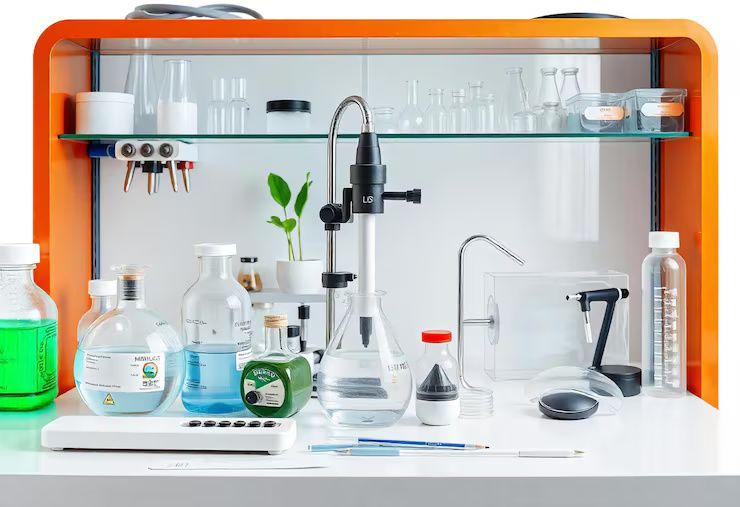
Context: Why Science Lab Workstations Exist
Science lab workstations exist to create structured environments where experiments can be performed safely and consistently. In scientific research, even small environmental variations can affect experimental results. For this reason, laboratories rely on carefully designed workspaces that control temperature, airflow, lighting, and equipment placement.
Traditional laboratories mainly used simple benches and manual instruments. Over time, research demands grew more complex. Modern science labs now include specialized workstations for molecular biology, analytical chemistry, electronics testing, and environmental monitoring.
Typical elements found in a laboratory workstation include:
-
Chemical-resistant laboratory benches
-
Storage cabinets for samples and tools
-
Ventilation systems or fume hoods
-
Measurement instruments and sensors
-
Computer systems for data analysis
-
Safety equipment such as eye wash stations and fire extinguishers
The concept behind these workstations is to keep experiments organized, reduce contamination risks, and provide a safe working environment for researchers and students.
In educational institutions, workstation layouts also support collaborative learning. Students can perform experiments in groups while instructors monitor procedures and safety compliance.
Importance: Why Laboratory Workstation Design Matters Today
Science lab workstations play an important role in modern research, healthcare, and education. Laboratories support many sectors including pharmaceuticals, biotechnology, environmental science, and academic research.
Proper workstation design helps solve several key challenges in laboratory environments.
Improved research accuracy
A structured workstation ensures that instruments, chemicals, and tools remain organized. This reduces experimental errors and improves data reliability.
Enhanced safety standards
Laboratory environments may involve hazardous chemicals, biological samples, or electrical equipment. Safety-focused workstation layouts minimize exposure risks and support emergency procedures.
Efficient workflow management
Researchers often perform multiple tasks during experiments such as measuring samples, recording observations, and analyzing results. An optimized workstation allows smoother transitions between these activities.
Support for advanced technology
Modern laboratories integrate digital tools like laboratory information management systems, automated analyzers, and cloud-based data platforms. Workstations now support both physical experiments and digital data processing.
The importance of laboratory workstations has also increased with the growth of high-value industries such as biotechnology research, pharmaceutical testing, and environmental monitoring.
The following table shows typical workstation components used in different scientific fields.
| Scientific Field | Common Workstation Equipment | Purpose |
|---|---|---|
| Chemistry | Fume hoods, analytical balances | Chemical reactions and measurements |
| Biology | Microscopes, incubators | Studying cells and microorganisms |
| Physics | Oscilloscopes, sensors | Measuring electrical or physical signals |
| Environmental Science | Water testing kits, spectrometers | Analyzing environmental samples |
| Biotechnology | PCR machines, sterile cabinets | Genetic and molecular research |
These specialized setups allow scientists to perform complex experiments while maintaining safety and accuracy.
Recent Updates: Trends in Laboratory Workstations
Laboratory workstation technology continues to evolve as scientific research becomes more data-driven and automated. Over the past year, several developments have influenced laboratory infrastructure.
Automation and robotics
Many research laboratories have adopted robotic systems that automate repetitive tasks such as sample handling and liquid dispensing. According to industry reports from 2025, automated laboratory platforms are becoming more common in pharmaceutical and biotechnology facilities.
Digital laboratory management
Laboratories increasingly rely on laboratory information management systems (LIMS) and electronic lab notebooks (ELN). These systems allow researchers to record experiment data digitally and collaborate across research teams.
Smart laboratory monitoring
New workstation setups include sensors that monitor temperature, humidity, and chemical exposure levels in real time. These monitoring systems help maintain consistent experimental conditions.
Sustainable laboratory design
Environmental sustainability has become a growing priority in laboratory design. Many facilities are adopting energy-efficient lighting, improved ventilation systems, and recyclable laboratory materials.
The following graph illustrates a simplified trend in laboratory technology adoption across research facilities.
| Year | Automation Adoption (%) |
|---|---|
| 2022 | 35 |
| 2023 | 42 |
| 2024 | 48 |
| 2025 | 55 |
The increasing adoption of automation and digital tools reflects the growing demand for efficient and scalable research environments.
Laws or Policies Affecting Laboratory Workstations
Laboratory environments are regulated by national safety standards and scientific guidelines to protect researchers, students, and the public.
In India, several regulatory bodies influence laboratory safety and infrastructure requirements.
Occupational safety guidelines
Laboratories must follow workplace safety standards related to chemical handling, ventilation systems, and protective equipment.
Environmental regulations
Environmental testing laboratories must comply with standards set by agencies such as the Central Pollution Control Board (CPCB). These rules ensure accurate environmental monitoring and safe disposal of chemical waste.
Education and research policies
Academic laboratories follow guidelines from the University Grants Commission (UGC) and other research organizations to maintain laboratory quality and safety.
Biotechnology and biosafety rules
Research involving biological samples or genetic material must comply with biosafety regulations to prevent contamination or accidental exposure.
These regulations ensure that laboratories operate responsibly while maintaining scientific reliability and environmental protection.
Tools and Resources for Laboratory Workstation Management
Several digital tools and platforms support laboratory workstation organization and scientific workflow management.
Useful tools include:
-
Laboratory Information Management Systems (LIMS) for managing samples and experimental data
-
Electronic Lab Notebooks (ELN) for recording research observations digitally
-
Chemical inventory tracking software for monitoring laboratory materials
-
Laboratory safety training platforms for educational institutions and research teams
-
Scientific data analysis software used in chemistry, biology, and physics research
Examples of widely used scientific platforms include:
-
LabWare LIMS
-
Benchling research platform
-
SciNote electronic lab notebook
-
GraphPad Prism data analysis software
These tools help laboratories maintain accurate records, improve collaboration, and ensure compliance with regulatory requirements.
Frequently Asked Questions About Science Lab Workstations
What is a science lab workstation?
A science lab workstation is a designated area within a laboratory where experiments, testing, and research activities take place. It typically includes equipment, storage, safety tools, and digital systems needed for scientific tasks.
What equipment is commonly found in a laboratory workstation?
Common equipment includes laboratory benches, microscopes, measurement instruments, chemical storage cabinets, computers for data analysis, and safety devices like fume hoods or eye wash stations.
Why is workstation organization important in laboratories?
Proper organization improves safety, reduces contamination risks, and helps researchers perform experiments accurately and efficiently.
How do digital systems support laboratory workstations?
Digital tools such as laboratory information management systems and electronic lab notebooks help record experiment data, track samples, and maintain research documentation.
Who uses science lab workstations?
Science lab workstations are used by researchers, laboratory technicians, students, healthcare professionals, environmental scientists, and engineers.
Conclusion
Science lab workstation concepts play an important role in modern scientific research and education. These workspaces are carefully designed environments that support experiments, testing procedures, and data analysis while maintaining safety and organization.
With the growth of biotechnology, environmental research, and pharmaceutical development, laboratories are becoming more advanced and technology-driven. Automation, digital data systems, and smart monitoring tools are transforming traditional laboratory setups into efficient research environments.
At the same time, regulations and safety standards ensure that laboratories operate responsibly and protect researchers as well as the surrounding environment.
Understanding how science lab workstations function helps educators, researchers, and institutions design better laboratories that support innovation, scientific discovery, and reliable experimental results.